

Publications on Religious Freedom and Nonprofit Law
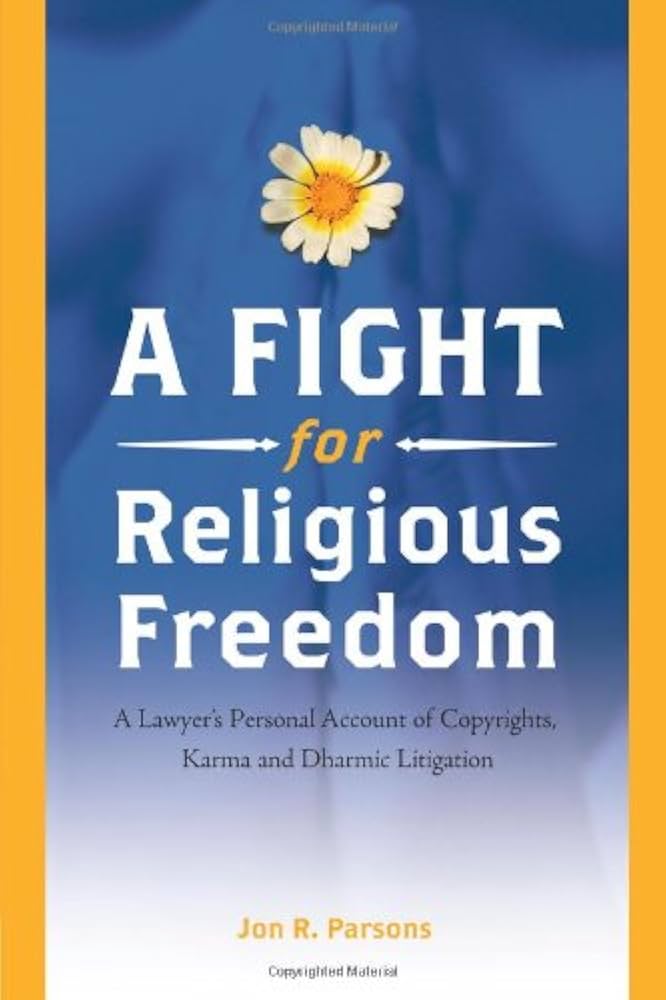
A Fight for Religious Freedom: A Lawyer's Personal Account of Copyrights, Karma and Dharmic Litigation by Jon R. Parsons
Crystal Clarity Publishers, 174 pages, 2012
For 12 years beginning in 1990 I was lead counsel for the team defending the Ananda Church of Self Realization in litigation brought against it by the Self-Realization Fellowship in Los Angeles. This donnybrook between gurubais concerned whether church names can be trademarked, religious teachings copyrighted, and a new church can identify itself with a teacher claimed by another church – here the deceased guru Paramhansa Yogananda,
J. Donald Walters, known as Swami Kriyananda, and a former SRF director and minister, founded the Ananda Village in the California Sierras in 1968. He started it as a home for the Fellowship of Inner Communion, a church he began to spread Yogananda’s expression of an amalgam of Hindu-Yoga and Christian principles.
The dispute boiled over when the Fellowship changed its name to the Church of Self-Realization. SRF claimed exclusive right to use “self-realization” in its name and trademarked it. Its lawsuit in federal court also sought to stop the Ananda Church from using any form of Self-Realization in its name, and prevent it from publicly espousing Yogananda’s teachings.
The case grew as it rolled through state and federal courts, appeals and remands, a writ of mandate, trademark terminations, and two jury trials, one federal one state, requiring several weeks each. Along the way, we obtained favorable Ninth Circuit decisions which, among other things, placed Yogananda’s 1946 Autobiography of a Yogi in the public domain, allowing Ananda to publish the original unexpurgated version for the first time in 50 years. The internet marketplace now offers most of Yogananda’s original works in a variety of formats and cost.
The federal case also raised interesting issues rarely decided. Does a Hindu sannyasi who has renounced all property ownership still own intangible copyrights he registered in his name? Can one church monopolize basic religious terminology in its name, like “salvation” or “self-realization”? To what extent are legal protections and business remedies available in fundamentally religious disputes?
These cases unfolded during the dawn of internet campaigns, and much was said online. I wrote this book to set the record straight.